

Beschreibung
Erhaltung: ss / ss+ | Abkürzungen
Katalognummer: Caius Considius Paetus
Durchmesser: 19,00 mm
weight 3,94gr. | silver Ø 19mm.
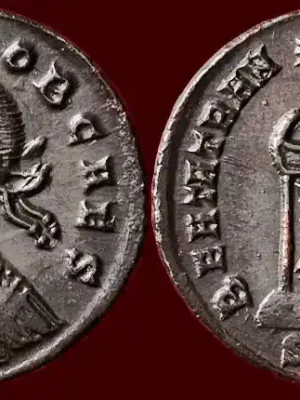
obv. Laureate head of Apollo right, A behind
rev. Curule chair, CCONSIDI above, PAETI in exergue
The letter A appearing on the obverse is presumably intended
to emphasize the identity of the deity (Apollo) depicted.
The monetary triumvirate of 46 BC was formed by Cordius Rufus, Titus Carisius and Caius Considius Paetus. From this moneyer not much is known. He was a member from the gens Considia, a plebeian family at Rome. First appearing early in the fifth century BC, they quickly faded into obscurity. The Considii came to prominence in the last century of the Republic, and under the early Empire, but none of them rose any higher than the praetorship. The main cognomina of the Considii were Gallus, Longus, Nonianus, and Paetus. Paetus translates as squinty or nearsighted. The denarii of Caius Considius Paetus were not issued in such large quantities as those of this two collaegues. He was probably the junior member of his monetary college and his coinage belongs to the latter part of the year. The reverse depicts a curule chair, alluding to the right of Caesar to seat on such a chair between the consuls in the Senate received after the Battle of Thapsus.
Are Caius Considius Longus and Caius Considius Paetus one and the same person ?
Caius Considius Longus, an ally of Pompeius the Great, was an iconic general and political during the last days of the Roman Republic. He deeply involved the great civil war between Caesar and Pompeius. He lead a powerful group of troops in Africa. Unfortunately for Caius, Caesars army was superior and best him. After the lost Battle at Thapsus he tried to escape for his life, but was captured at Hadrumentum and killed. It said that Caesar spared the life of Caiuss son. Theodor Mommsen accepted the view of Bartolomeo Borghesi that Caius Considius Longus and Caius Considius Paetus, was the same person but Michael Crawford, in the most recent catalogue of republican coinage says only the moneyer is a C. Considius Paetus, not otherwise known. The opinion of Michael Crawford seems to be the most plausible.
Crawford 465/2a | Sydenham 991 | BMCRR 4084
Babelon Considia 2 | CRI.77b | Albert 1443 | Sear 455
Attractive toning.
vf/vf+