

Beschreibung
Erhaltung: ss | Abkürzungen
Katalognummer: Side
Durchmesser: 18,00 mm
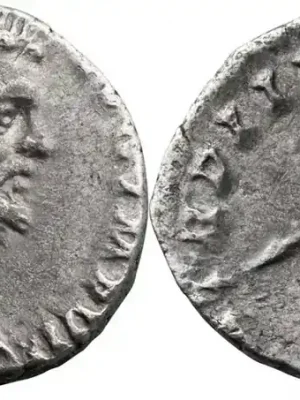
weight 10,63gr. | silver Ø 18mm.
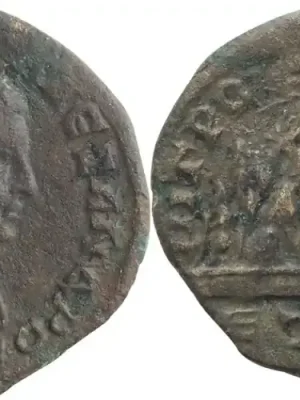
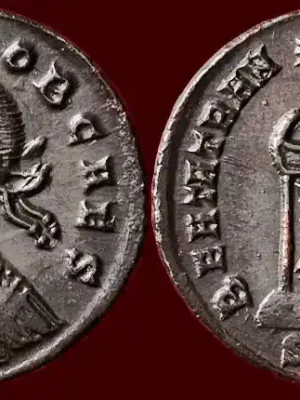
obv. Pomegranate, beneath dolphin left
rev. Head of Athena right, of archaic style,
wearing crested helmet, all within incuse square
According to legend Side is named after the goddess of fertility and nature, Side, which also means pomegranate. The word side is Anatolian and indicates where the first settlers came from. Probably they were Hittites from Anatolia. Excavations have disclosed a base of a basalt column of late Hittite origin dated to the 7th century BC. Maybe people settled here after a small migration following the destruction of Troy around 1200 BC. The Greek geographers Strabo (63 BC-19 AD) and Arrianos report that the first greek speaking inhabitants came from the town of Kyme in western Anatolia, 50 km north of Izmir, and when they came they could not understand the language spoken in the area. This colonisation probably took place in the 7th century, but it seems that the immigrants became so well integrated that they forgot their Greek. Several inscriptions from the 3rd and 2nd centuries BC cannot be interpreted nor translated. Coins dating back to the 5th century BC have signs that cannot be understood, and only in the 2nd century BC do Greek coins appear. Also the Greek pantheon seems to have been forgotten, for they worshipped Anatolian gods in the form of the mother goddess Cybele and the moon goddess Mên. In 546 BC Side came under Persian rule. In the 5th century BC the town could make its own coins , which presupposes a certain degree of independence. They probably did not fancy the Persians too much, for in 333 BC they surrendered to the Macedonian Alexander the Great without a fight, and from then on started the Hellenization on all fronts, including language, architecture and mythology. In this way Cybele became the Greek goddess Athena and Mên was replaced for Apollo.
After Alexanders death Side first came under Egypts Ptolomaic Dynasty and later under the Seleucid Dynasty in Syria, both founded by Alexanders generals. The harbour was expanded and the town quickly became one of the most important and richest towns on the south coast with a population of around 40.000 inhabitants. In the 1st century BC pirates from Cilicia spread to Pamphylia, where Side was the biggest and richest port. There was a naval base, shipyard and the biggest slave market in the Mediterranean, which meant more trade, but also a bad reputation. Stratonius, who was famous for his sharp tongue and keen wit answered the question which people is the worst and the most treacherous? by saying: In Pamphylia it is the people from Phaselis, but in the whole world it is the people from Side. But the Roman general Pompey expelled the pirates in 67 BC, and Side came under Roman domination, and the Romans erected several monuments and statues in honour of Pompey. Under Roman domination Side experienced another golden period. From the 1st to the middle of the 3rd century Side became a big city and seat of the provincial governor. Sea trade, especially with Egypt, increased and the imported goods travelled by caravan to central Anatolia. They exported olive oil, wine and timber. Hundreds of shops spread along the main streets and into the small alleys. The town kept its slave market, and the slaves mainly came from Africa. In the 3rd century there was a Christian community and Emperor Diocletian (285-305) started persecutions of Christians. From this period there are also remains of two Jewish synagogues. Sides last period of bloom came during the Byzantine Empire in the 5th and 6th centuries, when the town became the seat of the archbishop of west Pamphylia. Some of the temples were transformed into Orthodox churches and the town grew outside the city walls. In the middle of the 7th century the Arab pirate attacks began, and the whole of the Anatolian Mediterranean coast became a war zone. At the same time the harbour sanded up. The inhabitants started moving to Antalya, which was better protected and gradually took over from Side. There was a big fire in the 9th century and in the 10th century Arab pirates established a pirates nest in Side. Earthquakes and sanding dealt a deathblow and Side disappeared under the sand. The Seljuks settled north of Side in 1207, the Ottomans, another Turkish tribe, took over in 1391. It concerns here the earliest coin of Side. Very rare.
BMC 1-3 | SNG.v.Aulock 3760 | SNG.Copenhagen 368
Atlan 4var. | Kraay 1001 | SNG.Paris 625 | Sear 5423
Babelon, Traité pl. 24, 6 RR
vf